
Woman's Dress 14th–early 16th century Chuquibamba Women's wraparound dresses, made in the Andes of southern Peru during late preconquest centuries, were worn pinned at one shoulder and held in place by a wide belt. Basically such dresses when worn were large rectangles that were folded over at the top to form a kind of wide collar or double bodice. Those with panels of an intricately repeated pattern top and bottom, such as this example that is folded over at the top, were carefully balanced visually, the wide panels effectively framing the ordered diagonal elements in the center. Consistant w
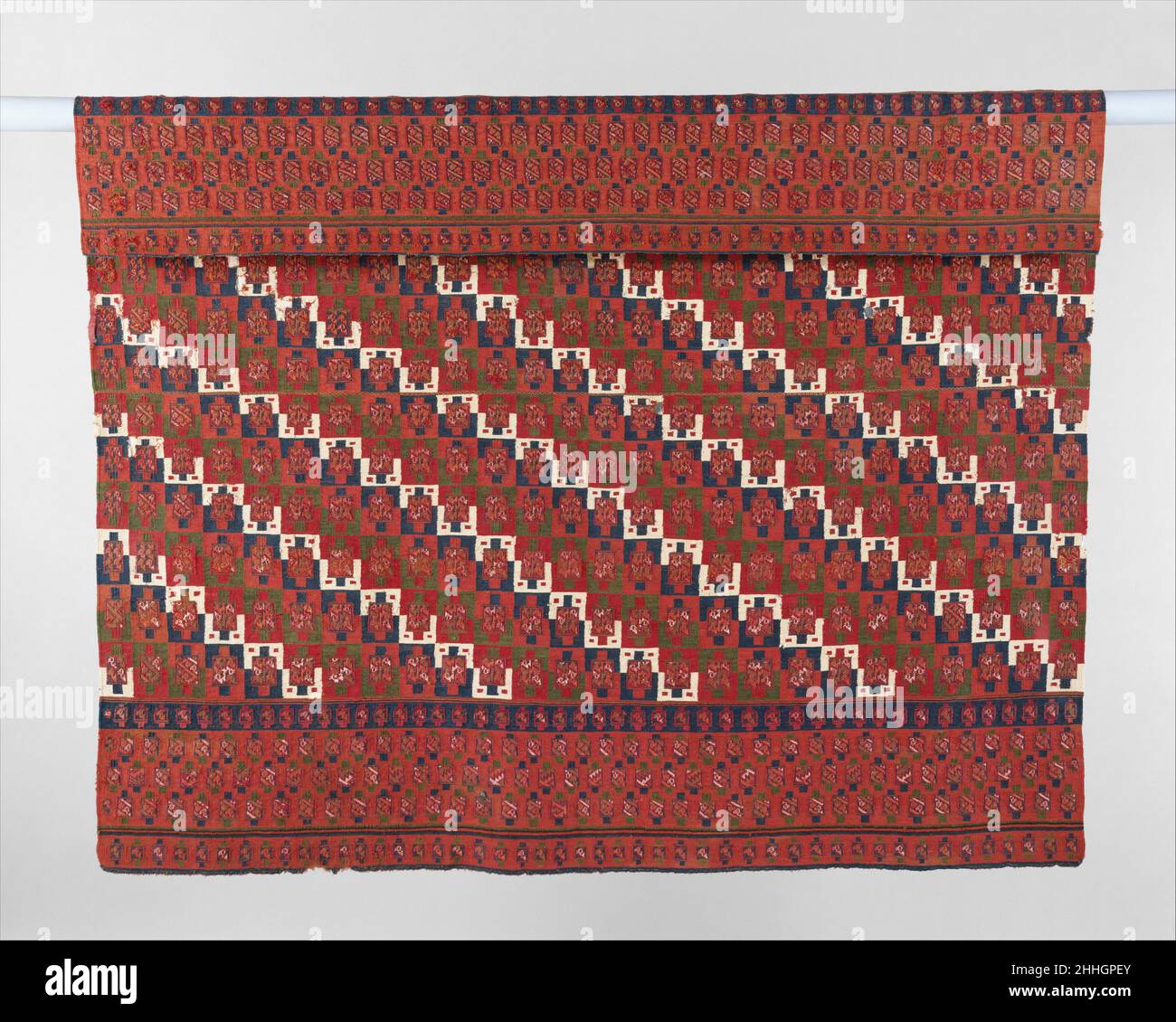
Image details
Contributor:
MET/BOTImage ID:
2HHGPEYFile size:
33.2 MB (2.5 MB Compressed download)Releases:
Model - no | Property - noDo I need a release?Dimensions:
3811 x 3049 px | 32.3 x 25.8 cm | 12.7 x 10.2 inches | 300dpiDate taken:
22 January 2022More information:
Access rights only. This is a handout or public domain image supplied by a third party. Ä¢¹½´«Ã½ grants access to the digital file but provides no warranties regarding copyright or moral rights. Alteration, modification, or cropping is prohibited without prior approval. All commercial uses require advance authorization from the content provider.
This image could have imperfections as it’s either historical or reportage.
Woman's Dress 14th–early 16th century Chuquibamba Women's wraparound dresses, made in the Andes of southern Peru during late preconquest centuries, were worn pinned at one shoulder and held in place by a wide belt. Basically such dresses when worn were large rectangles that were folded over at the top to form a kind of wide collar or double bodice. Those with panels of an intricately repeated pattern top and bottom, such as this example that is folded over at the top, were carefully balanced visually, the wide panels effectively framing the ordered diagonal elements in the center. Consistant with the Chuquibamba textile style, this dress is thought to have been woven in the southern Andean region near Arequipa, and to have been contemporary with Inca textiles that were made within a similar highland textile tradition. It was a tradition based on the use of camelid hair, here probably alpaca, with a design program of small scale repeated elements, and strong color of closely related hue. Two shades of red, a dark blue, and a dark green, were used here, all of which are well set off by a gleaming white.The Chuquibamba textile style has only recently been distinguished from the larger body of Inca work, and women's dresses isolated from among other large rectangular pieces that have been called mantles.. Woman's Dress 317736

