
William Coxe, manuscript, 1810-1831, This illustration features two types of apples, each depicted in a detailed and vibrant manner. At the top is the Gloucester White, characterized by its yellow-green skin, faint speckles, and round shape. Below it is the Pearmain Pippin, which showcases a rich red hue with a glossy surface and varying shades, highlighting its textured skin and natural imperfections. Each apple is labeled with its name, providing a clear identification of these distinct varieties. The composition emphasizes the unique qualities of each fruit, inviting appreciation for their
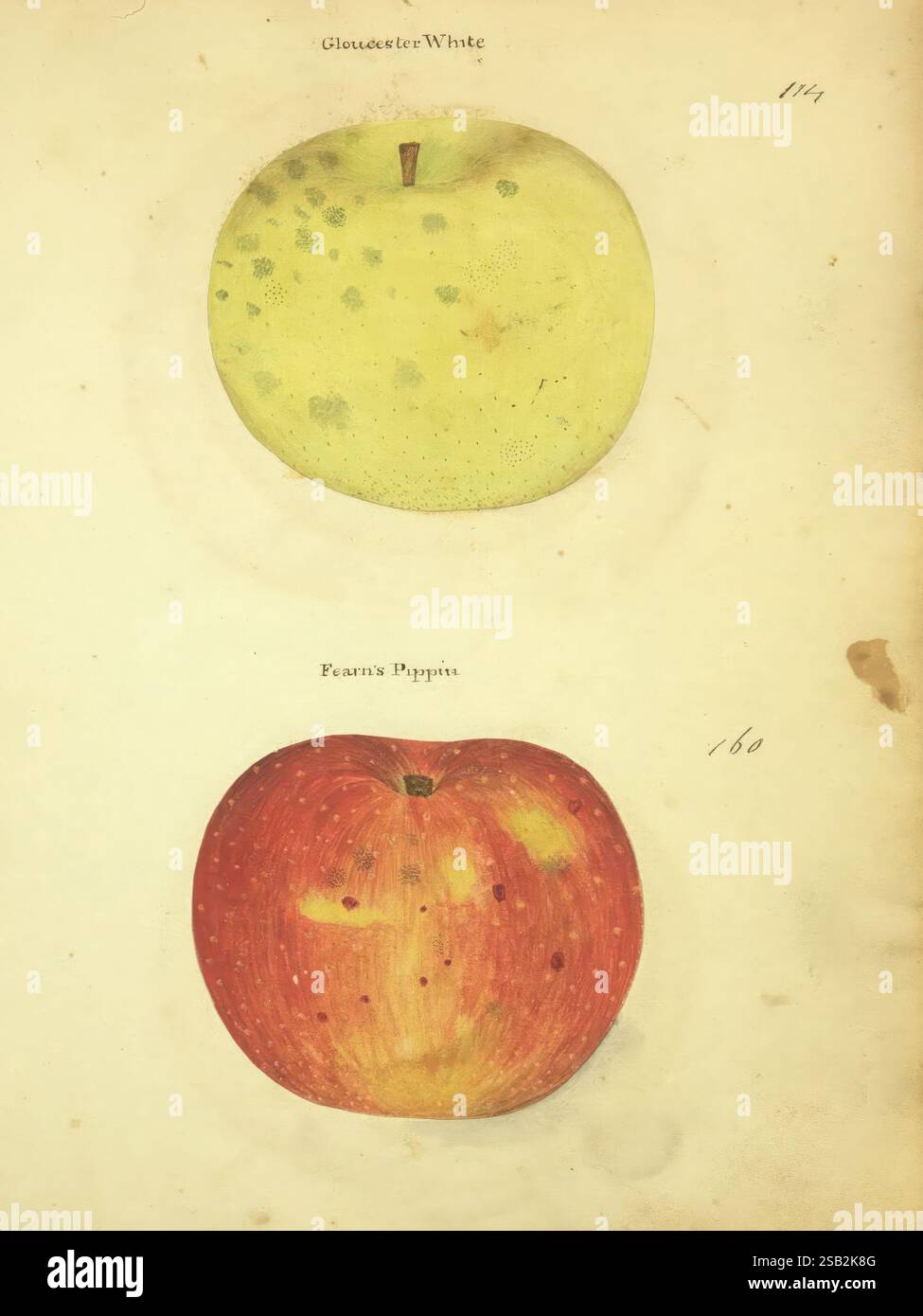
Image details
Contributor:
Penta Springs LimitedImage ID:
2SB2K8GFile size:
28.4 MB (687.6 KB Compressed download)Releases:
Model - no | Property - noDo I need a release?Dimensions:
2729 x 3638 px | 23.1 x 30.8 cm | 9.1 x 12.1 inches | 300dpiPhotographer:
ArtokoloroMore information:
This image could have imperfections as it’s either historical or reportage.
William Coxe, manuscript, 1810-1831, This illustration features two types of apples, each depicted in a detailed and vibrant manner. At the top is the Gloucester White, characterized by its yellow-green skin, faint speckles, and round shape. Below it is the Pearmain Pippin, which showcases a rich red hue with a glossy surface and varying shades, highlighting its textured skin and natural imperfections. Each apple is labeled with its name, providing a clear identification of these distinct varieties. The composition emphasizes the unique qualities of each fruit, inviting appreciation for their individual beauty and characteristics.

