
Just after Baily's Beads are visible, the light creates what is known as the "diamond ring effect". Baily's Beads, sometimes known as the diamond ring effect, are a feature of annular and total solar eclipses. They are created by the irregular topogrpahy on the surface of the moon that allows light to shine through in some places white being blocked in others. Baily's beads are named after Francis Baily who explained the phenomena in 1836. The sun's corona is a blanket of extremely hot gases made up of hihgly ionized materials, including iron. The actual temperature of the corona is mor
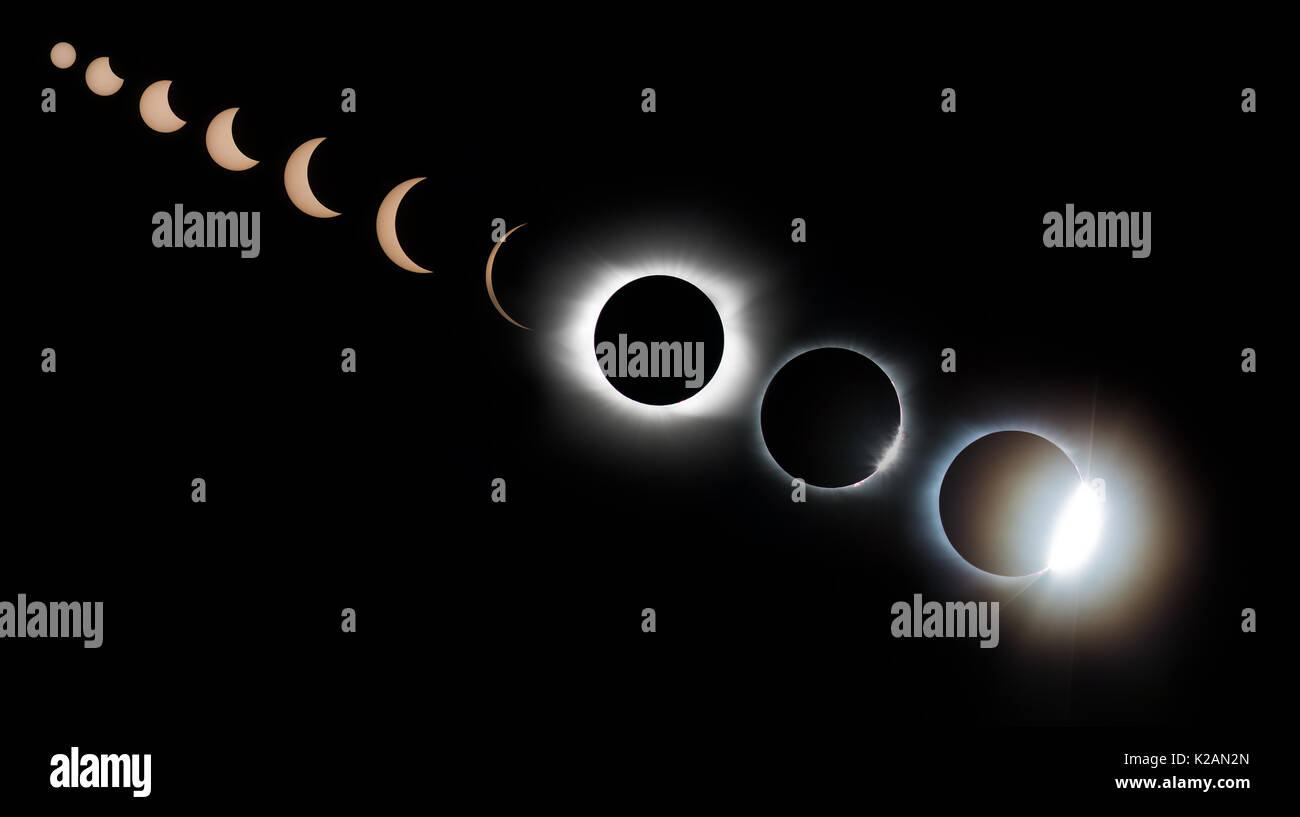
Image details
Contributor:
Cothron PhotographyImage ID:
K2AN2NFile size:
31.1 MB (232 KB Compressed download)Releases:
Model - no | Property - noDo I need a release?Dimensions:
4405 x 2464 px | 37.3 x 20.9 cm | 14.7 x 8.2 inches | 300dpiDate taken:
21 August 2017Location:
Lake Chatuge, Hiawassee, Georgia, United StatesMore information:
Just after Baily's Beads are visible, the light creates what is known as the "diamond ring effect". Baily's Beads, sometimes known as the diamond ring effect, are a feature of annular and total solar eclipses. They are created by the irregular topogrpahy on the surface of the moon that allows light to shine through in some places white being blocked in others. Baily's beads are named after Francis Baily who explained the phenomena in 1836. The sun's corona is a blanket of extremely hot gases made up of hihgly ionized materials, including iron. The actual temperature of the corona is more that 100 times hotter than the surface of the sun, but far less dense and puts out only a small fraction of the light that the surface does, so is difficult to see outside of a total eclipse. It is believed that the sun's magnetic fields serve to heat the corona to this elevated temperature.

