
Carbon-13. Diagram showing the nuclear composition and electron configuration of an atom of carbon-13, a natural and stable isotope of the element car
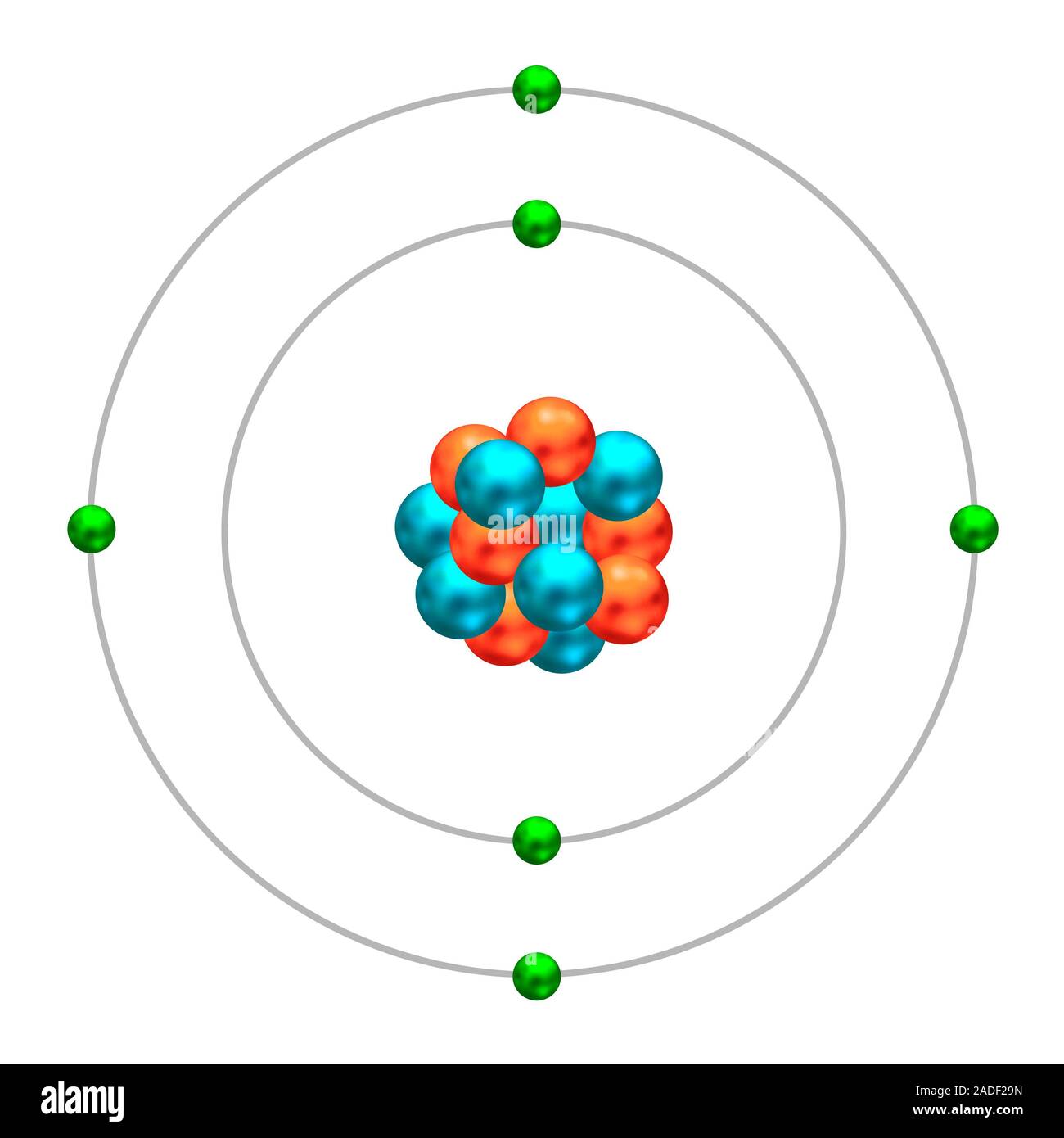
Image details
Contributor:
Science Photo LibraryImage ID:
2ADF29NFile size:
50.7 MB (277.3 KB Compressed download)Releases:
Model - no | Property - noDo I need a release?Dimensions:
4211 x 4211 px | 35.7 x 35.7 cm | 14 x 14 inches | 300dpiDate taken:
8 October 2019Photographer:
MIKKEL JUUL JENSEN / SCIENCE PHOTO LIBRARYMore information:
Carbon-13. Diagram showing the nuclear composition and electron configuration of an atom of carbon-13, a natural and stable isotope of the element carbon (C). The nucleus consists of 6 protons (red) and 7 neutrons (blue). Six electrons (green) bind to the nucleus, successively occupying available electron shells (rings). Carbon (C) forms the basis of life on Earth. It has 15 known isotopes, from carbon-8 to carbon-22, two of which (carbon-12 and carbon-13) are stable. The longest-lived radioisotope is carbon-14, with a half-life of 5, 700 years. This is used in archaeology to date biological material. The isotopic signature of carbon-13 (which makes up just over 1 percent of natural carbon) is used to study and track biological and geological processes over time.

