
Eggs in empty Pigeon Nest
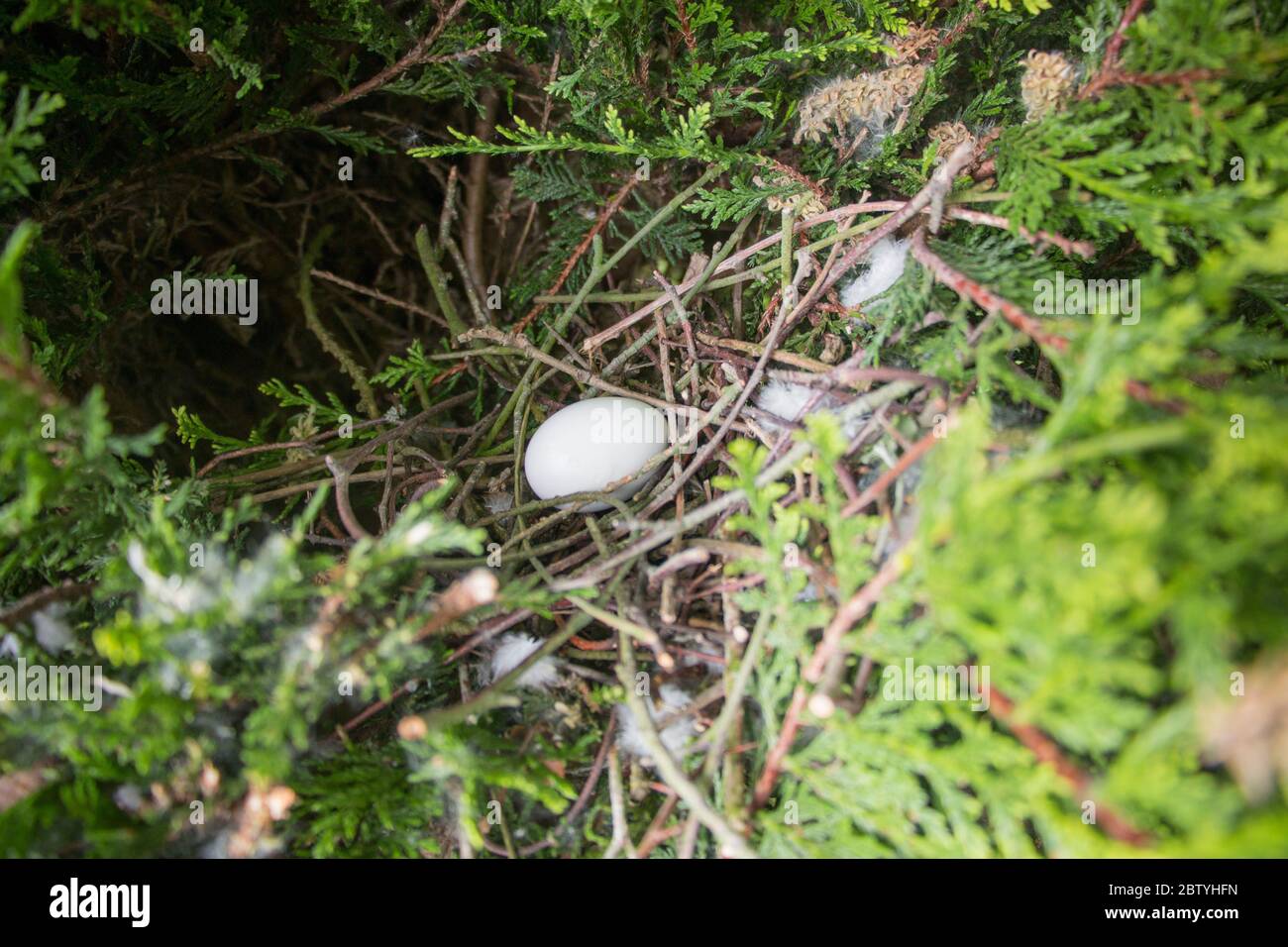
Image details
Contributor:
Daniel Valla FRPSImage ID:
2BTYHFNFile size:
63.3 MB (3 MB Compressed download)Releases:
Model - no | Property - noDo I need a release?Dimensions:
5760 x 3840 px | 48.8 x 32.5 cm | 19.2 x 12.8 inches | 300dpiDate taken:
16 May 2020Location:
Pembrokeshire Wales UKMore information:
The common wood pigeon (Columba palumbus) is a large species in the dove and pigeon family. It belongs to the genus Columba and, like all pigeons and doves, belongs to the family Columbidae. It is locally known in southeast England as the "culver"; This name has given rise to several areas known for keeping pigeons to be named after it, such as Culver Down. It breeds in trees in woods, parks and gardens, laying two white eggs in a simple stick nest which hatch after 17 to 19 days. Wood pigeons seem to have a preference for trees near roadways and rivers. Males exhibit aggressive behaviour towards each other during the breeding season by jumping and flapping wings at each other. Their plumage becomes much darker, especially the head, during hot summer periods. Breeding can happen year round if there is food abundant however breeding season most commonly occurs in autumn usually in the months of August and September. The nests are vulnerable to attack, particularly by crows, because they live in the countryside, the more so early in the year when the leaf cover is not fully formed. The young usually fly at 33 to 34 days; however, if the nest is disturbed, some young may be able to survive having left the nest as early as 20 days from hatching. In a study carried out using ring-recovery data, the survival rate for juveniles in their first year was 52 per cent, and the adult annual survival rate was 61 per cent. For birds that survive the first year the typical lifespan is thus only three years, but the maximum recorded age is 17 years and 8 months for a bird ringed and recovered on the Orkney Islands.

